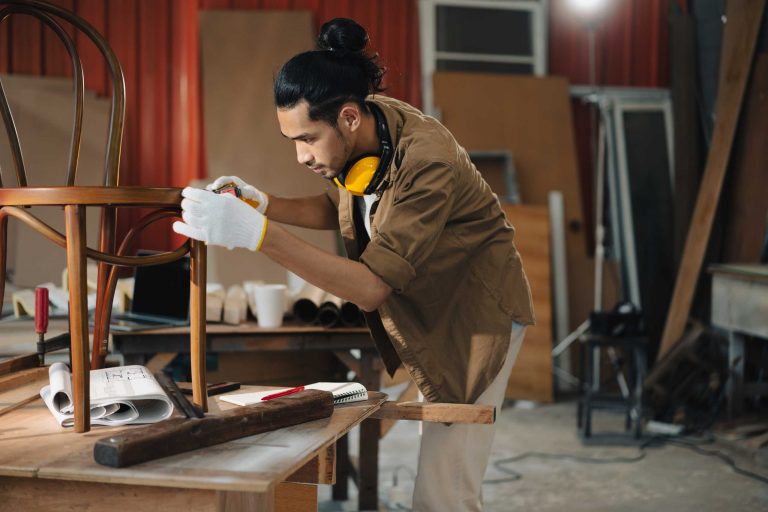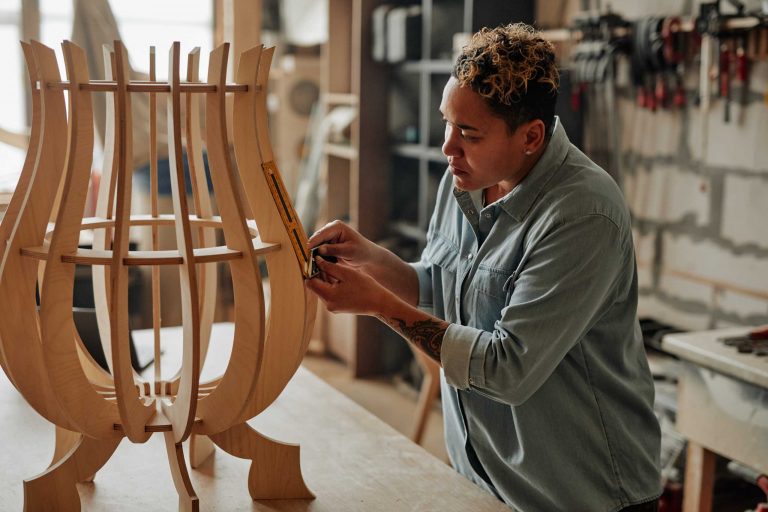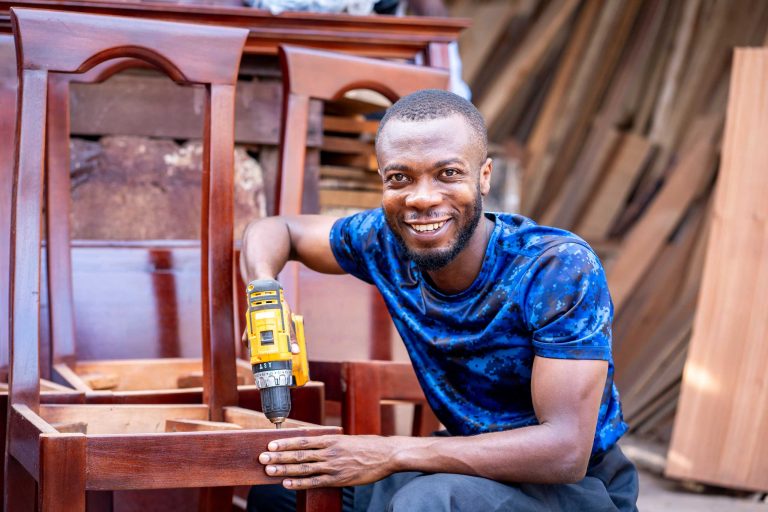
One of the hallmarks of much of modern education is the promise of fast and efficient learning. Craftsmanship doesn’t lend itself to this. You don’t learn how to make furniture by reading a book. You learn how to make furniture by cutting wood and feeling how the tools react to it. The learning occurs as a result of observing the outcomes of your actions and modifying your behavior in response. This idea changes how you think about learning: instead of a goal of completion, the goal is to learn as deeply as possible.
Much of the learning of a craft comes from work and involvement with the physical world. Just because something appears to be the right measurement on paper doesn’t mean it will look right once you have cut it out in wood. A joint may appear simple when described, but turns out to be much harder in practice. These small battles that you fight with the physical world to bend it to your will teach you to pay attention and learn from the world. Over time, you will start to see patterns and be able to predict the likely outcome of your actions, and will learn to react correctly instead of simply guessing.
The fact that there are no short-cuts in craft is actually a benefit. As you master techniques, they will overlap and reinforce each other. Cutting will inform your shaping. Your assembly will inform your cutting. The finish you plan will inform your assembly. Instead of each step being a separate entity, they will all become intertwined. This interweaving allows you to build a solid platform from which you can continue to grow, instead of continuing to wade through the mire of all the little details. With this solid platform, you will be able to approach complex projects with a sense of confidence, instead of confusion. Your hands will know what to do, and your brain will be able to focus on other things. You will begin to make decisions because you know what will happen, not because you are hoping for a certain outcome.
Another way that learning a craft forces you to learn in a beneficial way is through mistakes. It is impossible to make something yourself without having things go wrong. The advantage of learning a craft is that it teaches you to pause and consider what you did wrong. Instead of continuing to repeat the same error over and over, you will learn to take time to analyze and learn from your mistakes. You will learn to take mistakes as an opportunity to learn, and prevent yourself from repeating the same error.
Learning a craft is not a quick process. Instead, it is something that happens over time. This slow learning is not a drawback, but an advantage. Learning a craft is an exercise in patience and in clarity. You will not be able to make perfect things overnight, but the process of learning to make things is one of the most valuable gifts you can give yourself.