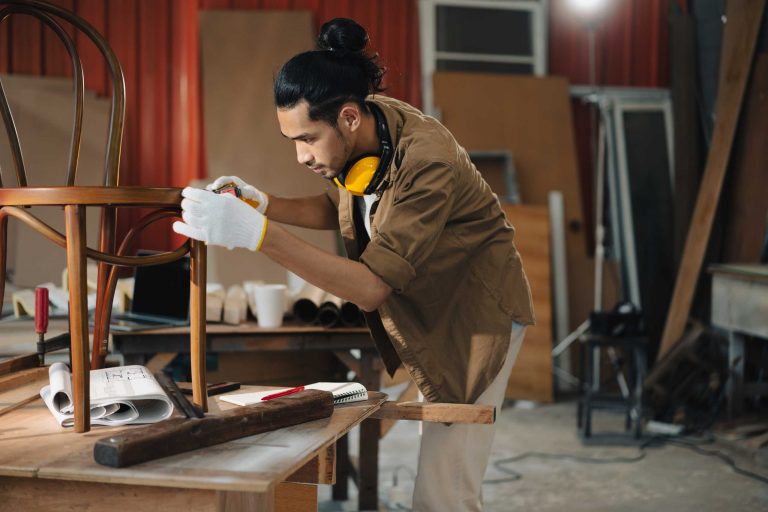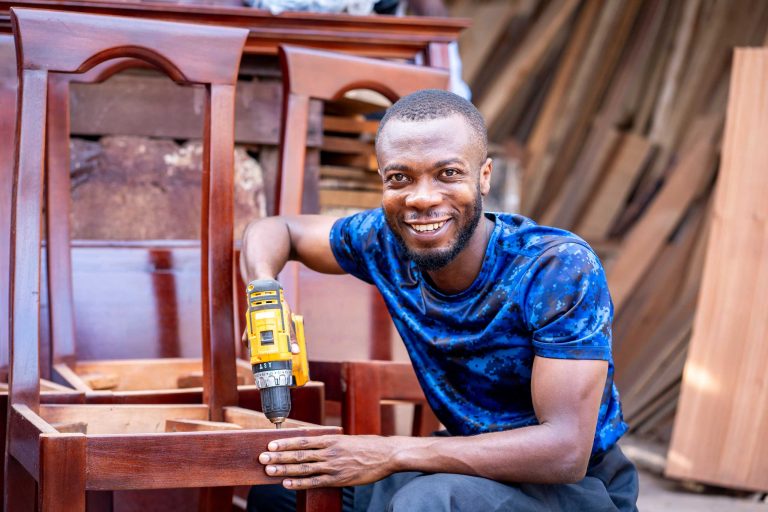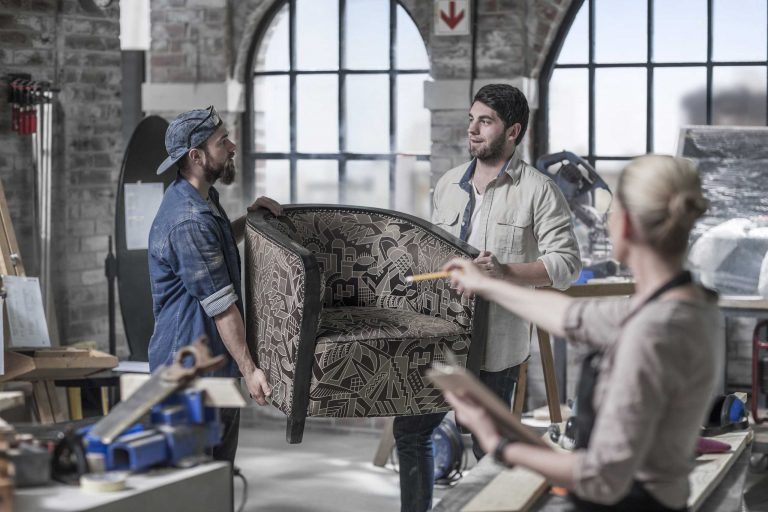
Wood, in particular, “speaks” through its weight, its texture, its ease or resistance to cutting, the direction of its grain. One must be attentive and deferential to learn from materials. One must not force one’s will on them in a rigid way, but rather work in harmony with what the material will allow or suggests. In this way, the process of creation is a kind of conversation.
Different kinds of woods have different properties: some are denser and more stable, some have a grain that runs in a way that is stronger or weaker, some retain more moisture and will likely shift over time. Disregarding these properties can result in a piece that is structurally unsound or visually awkward. Direct experience with properties of materials helps one understand cause and effect. With enough experience, this becomes intuitive, and informs one’s decision-making long before the chisel hits the wood.
In fact, much can often be learned from one’s “mistakes”. If a joint comes apart, or a board warps, it may indicate an assumption that needs to be revised. Rather than something to be ashamed of and hidden, this is simply information that can help one refine one’s judgement, and become more flexible. As one becomes more comfortable, the limitations of materials cease to feel confining, but rather become the context in which one works, and even inform more elegant solutions.
An attention to the aesthetic qualities of materials and the marks that are made upon them also informs the crafting process. The variability of the wood itself may inform how a surface is finished, or how a shape is resolved. Rather than attempting to erase this variability and impose a uniformity on one’s creation, one may incorporate it into the design, and allow the unique character of the material to remain present. The end result is often a piece that has a more organic feel, a piece that feels more “real”.
Materials also inform one about patience and respect. They remind one that one is never entirely in control, and that an excellent outcome depends on cooperation rather than domination. Repeated practice working with tangible materials helps one develop a mindset that values subtlety and proportion. This mindset is what distinguishes a simple competence from true mastery, and results in objects that are not only structurally sound, but have a beauty and presence that is understated yet undeniable.