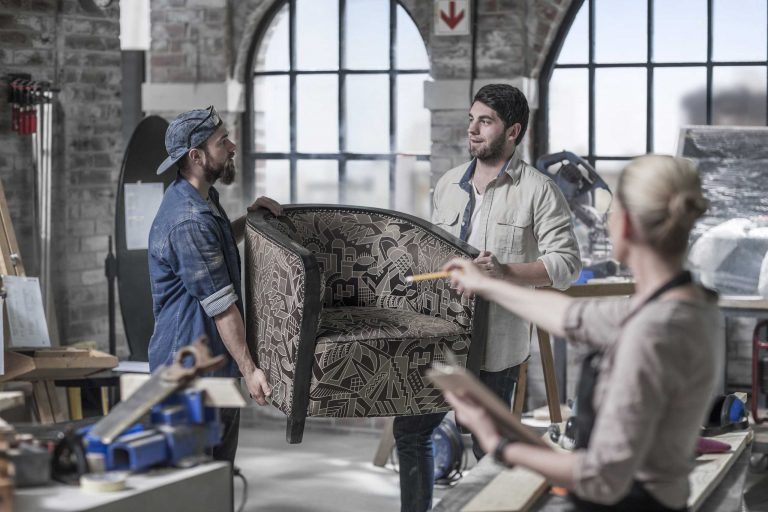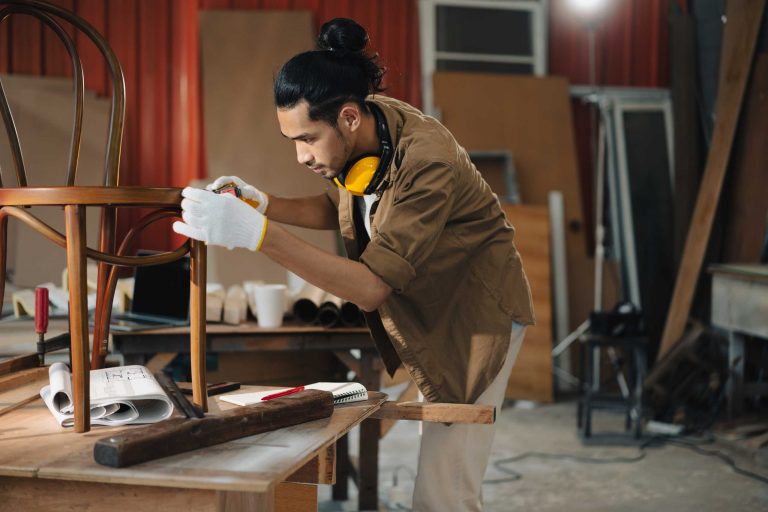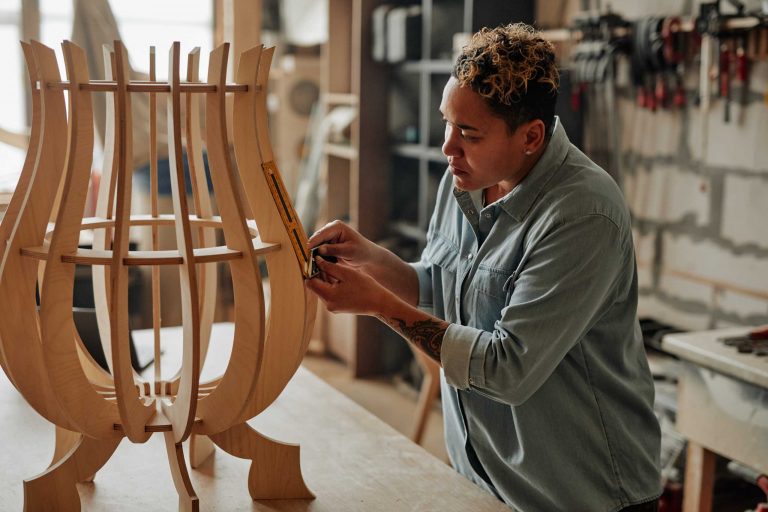
Handcrafted furniture is a response to a world that values speed and multiplicity. It is an exercise in a different kind of temporality, one in which the user is invited to engage in a slower, more meditative relationship with the objects that fill her day-to-day life. Handcrafted furniture bears the traces of the choices and imperfections of the people who make it. Those traces are a valuable indicator of the time, effort, and thought that went into each object. They signal that the object was handled and considered, that it was made to bear the weight and pressure of daily use. They remind us that this piece of furniture was a singular undertaking that demanded focus and attention. It was not one of a thousand or a million. It was the product of just a few hands, rather than dozens or hundreds of them. Above all, it was not made by a machine. This is the essential difference between handcrafted furniture and any other kind. It is the essential value of handcrafted furniture. Here are some tips on how to design handcrafted furniture:
Your materials are not inert and lifeless. A tree, for instance, has its own natural properties that you need to consider as you design your furniture. You should respect the natural direction of the wood grain, the natural moisture content of the wood, and so forth. If you don’t, you will end up with a piece of furniture that may crack and split. In addition, you need to understand how your materials respond to changes in humidity and temperature. You should not fight against the natural properties of your materials. Instead, you should work with them and design your furniture accordingly.
Design with Restraint Handcrafted furniture is not flashy. It is subdued and restrained. You should avoid anything excessive. You should avoid designs that make bold statements. Instead, you should aim for a clean simplicity. Each element of your design should be necessary and proportionate. You should strive for balance and harmony in all that you do. You should eliminate any element that does not contribute to the stability, functionality, or aesthetic appeal of your furniture.
Learn from Repetition Repetition is the key to mastery. You should make the same thing over and over again until you get it right. You should make the same joint dozens of times until you can execute it flawlessly. You should repeat the same motion until it becomes second nature to you. This repetition will help you perfect your craft. You will learn from your mistakes and avoid them in the future. Over time, you will develop a sense of what works and what does not. You will develop muscle memory and instincts that will guide your hands as you work.